SEAWATER DESALINATION SOLUTIONS 

To reuse the heat from Hydro mining system and generate fresh water


----------------------------------------------------------------------------------------------------------------------------------

According to UN data, over 40% of the global population faces freshwater shortages, especially in arid regions such as the Middle East, North Africa, South Asia, and the western United States. The United Nations Environment Programme (UNEP) predicts that by 2050, global freshwater demand will increase by 50%, making water scarcity an even more pressing issue amid climate change, population growth, and urbanization.

To address these challenges, Heatcore introduces the “IDC Waste Heat + Distillation” solution—transforming mining heat into sustainable freshwater, building the foundation for a low-carbon water ecosystem.  

Limitations of centralized urban water networks and long-distance freshwater pipelines
Urban Water Networks Constraints

Urban water networks rely on long-distance  pipelines, which are costly, prone to contamination, and have limited reach in remote areas. These challenges make it difficult to provide stable and safe freshwater supplies.

Off-grid water challenges in remote, desert, and island regions without centralized water grids
Off-Grid Water Challenges

Rural, desert, and island regions lack access to centralized water grids, relying on groundwater or long-distance transport, which is expensive, unsustainable, and increases environmental risks.

Seawater and brackish water sources requiring advanced desalination treatment
Challenges with Complex Water Sources

In arid regions and saline zones, communities often face highly saline groundwater, brackish water, or direct seawater. These water sources are difficult to treat, and unsuitable for drinking or irrigation without advanced purification.
OUR SOLUTION

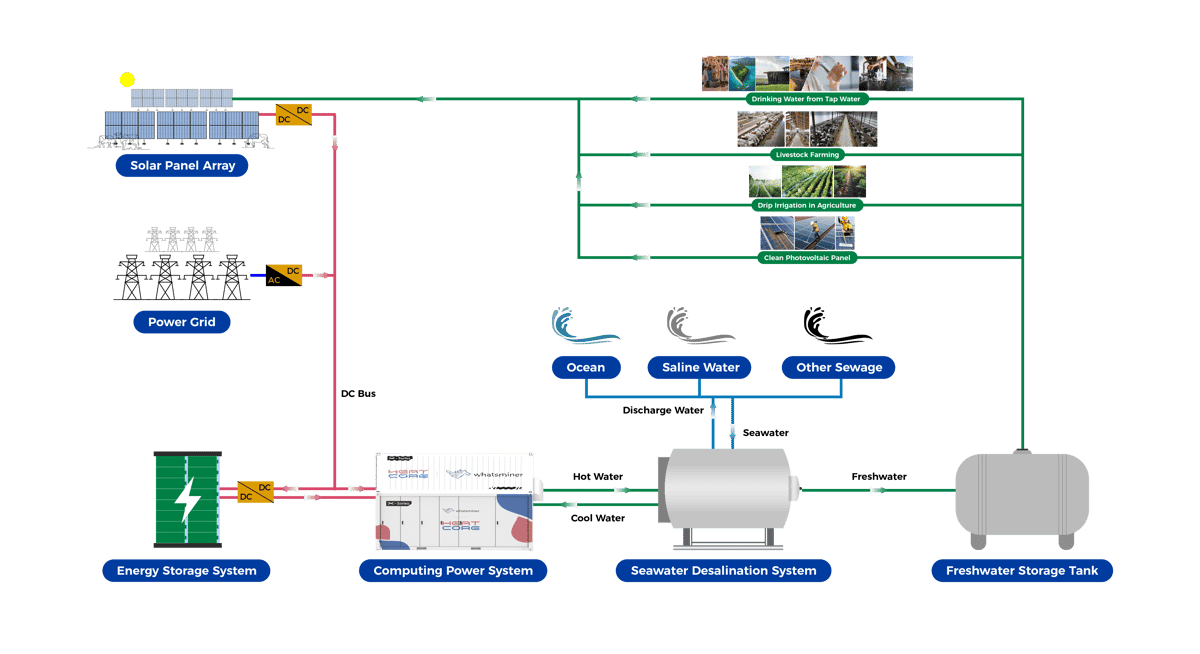
To address these challenges, Heatcore introduces an efficient and sustainable Seawater Desalination Solution based on the “IDC Waste Heat + Distillation” approach. By harnessing waste heat from mining operations, the system produces clean freshwater while achieving complete energy independence through optional integration with renewable energy sources. Its modular design ensures scalability and adaptability across diverse environments, supporting sustainable water supply for agriculture, livestock farming, and off-grid communities, and laying the foundation for a low-carbon water ecosystem.

We generate fresh water by using the heat from Bitcoin mining
Waste heat from the mining process is transferred to the seawater desalination system, where it powers the distillation process to convert seawater water into freshwater. This system can desalinate not only seawater but also brackish water, industrial wastewater, and domestic sewage after pre-treatment  

THE FRESHWATER IS THEN STORED AND DISTRIBUTED FOR

· Domestic Supply In Off-Grid Areas
· Agricultural Irrigation To Support Crop Growth
· Livestock Farming To Ensure A Stable Water Source


SYSTEM SPECIFICATIONS

Dimensions & Weight. Flow Rates & Temperatures
Hot Water

Temperature Inlet/Outlet(°C / °F) 

65–80°C (149–176°F) / 50–70°C (122–158°F) 

Flow Rates(m3/h)

96

Seawater

Temperature Inlet/Outlet(℃)

<36°C (<96.8°F) 

Flow Rates(m3/h)

150

Total Dissolved Solids(ppm)

<38000

Desalinated Water

Flow Rates(m3/d)

48
Total Dissolved Solids(ppm) <10
Dimensions and Weight(mm/T)

Desalination Equipment

1850×1850×1930mm/2.2T

Container

6058×2438×2896mm/7.5T


Water Production Example: 1600kW System

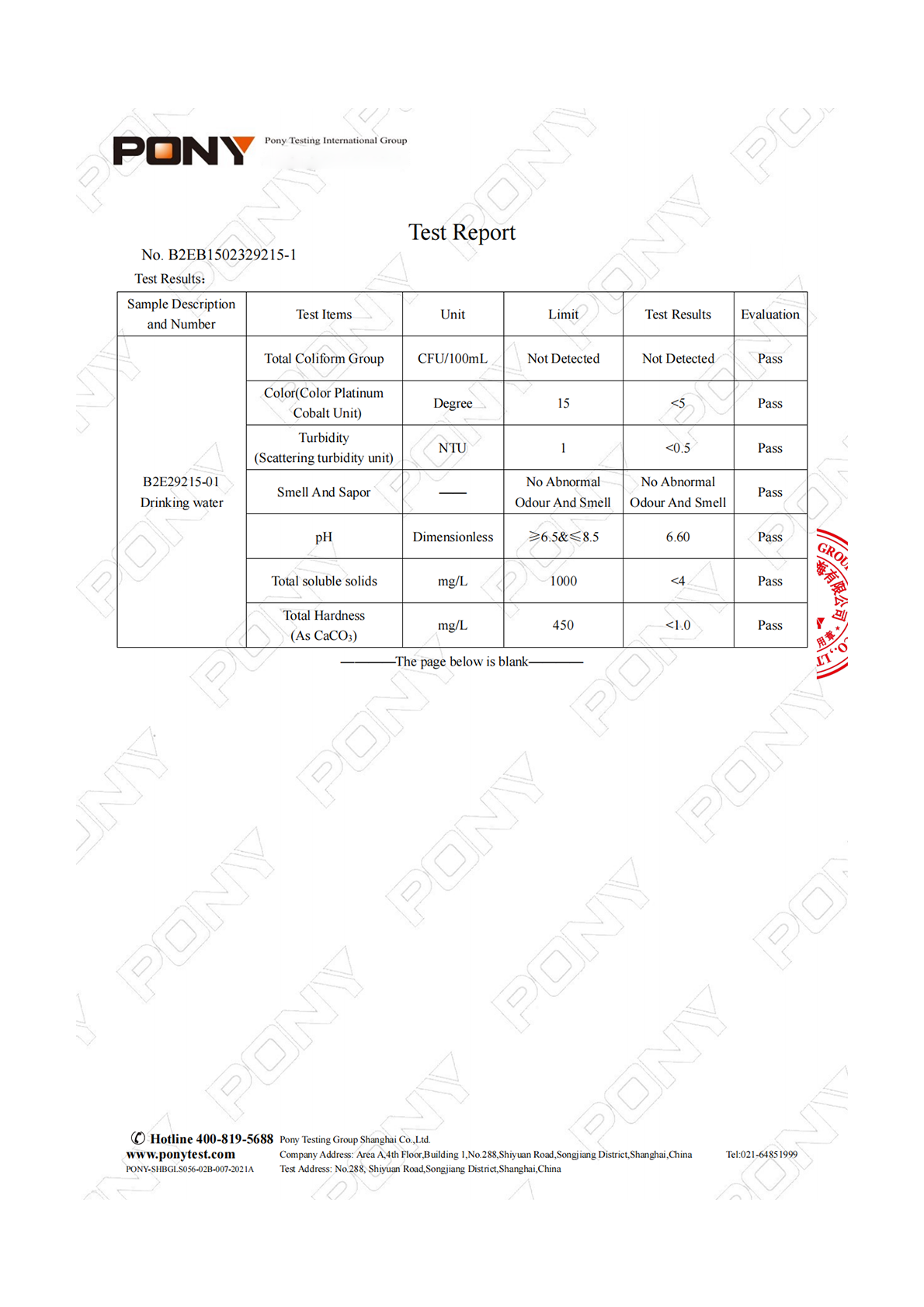
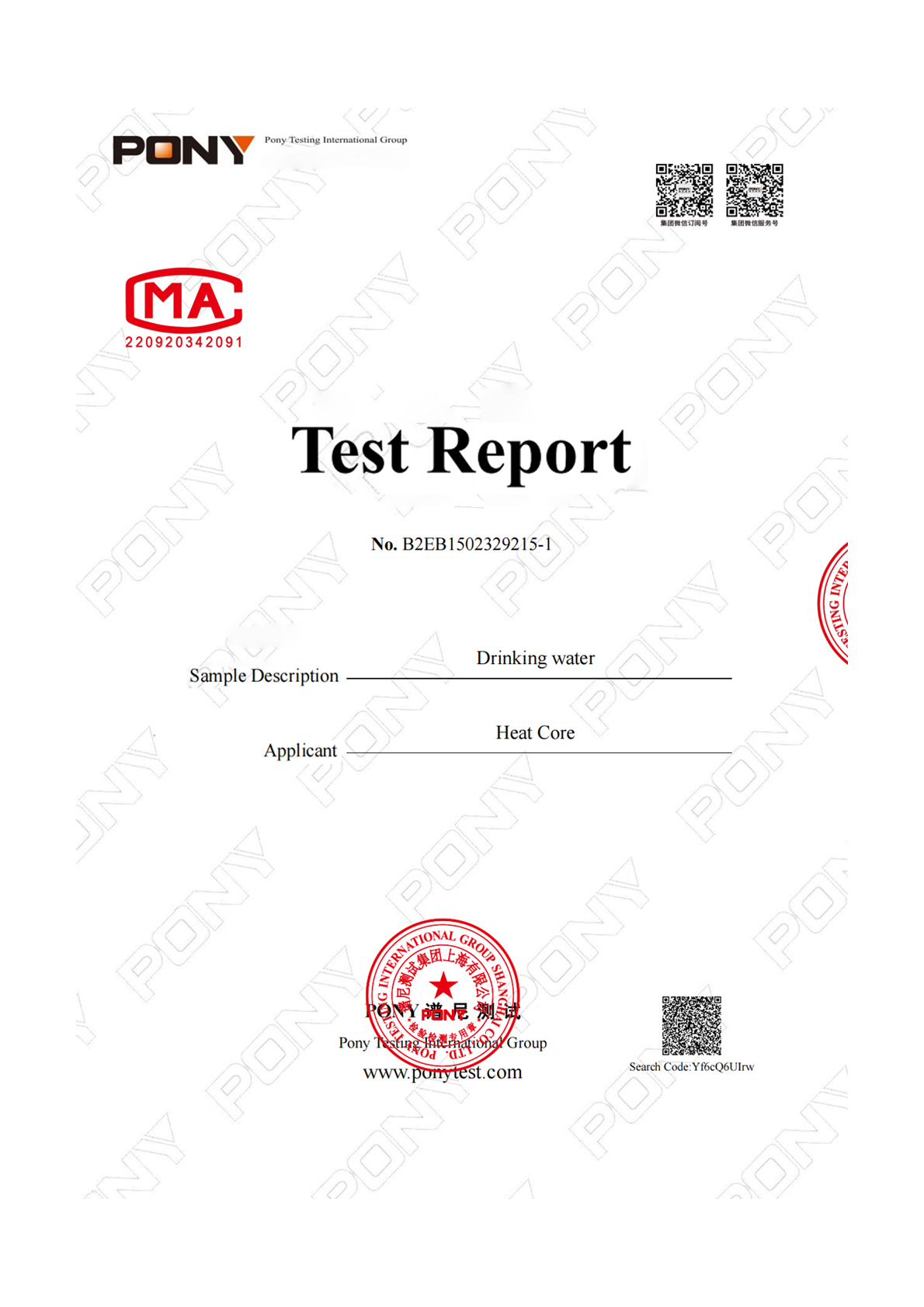
A 1600kW System Can Generate 48 Tons Of Freshwater Per Day. The Produced Water Meets International Drinking Water Standards, Including CHINA / USA / WTO Regulations, as verified by water quality reports.